18.05.2026
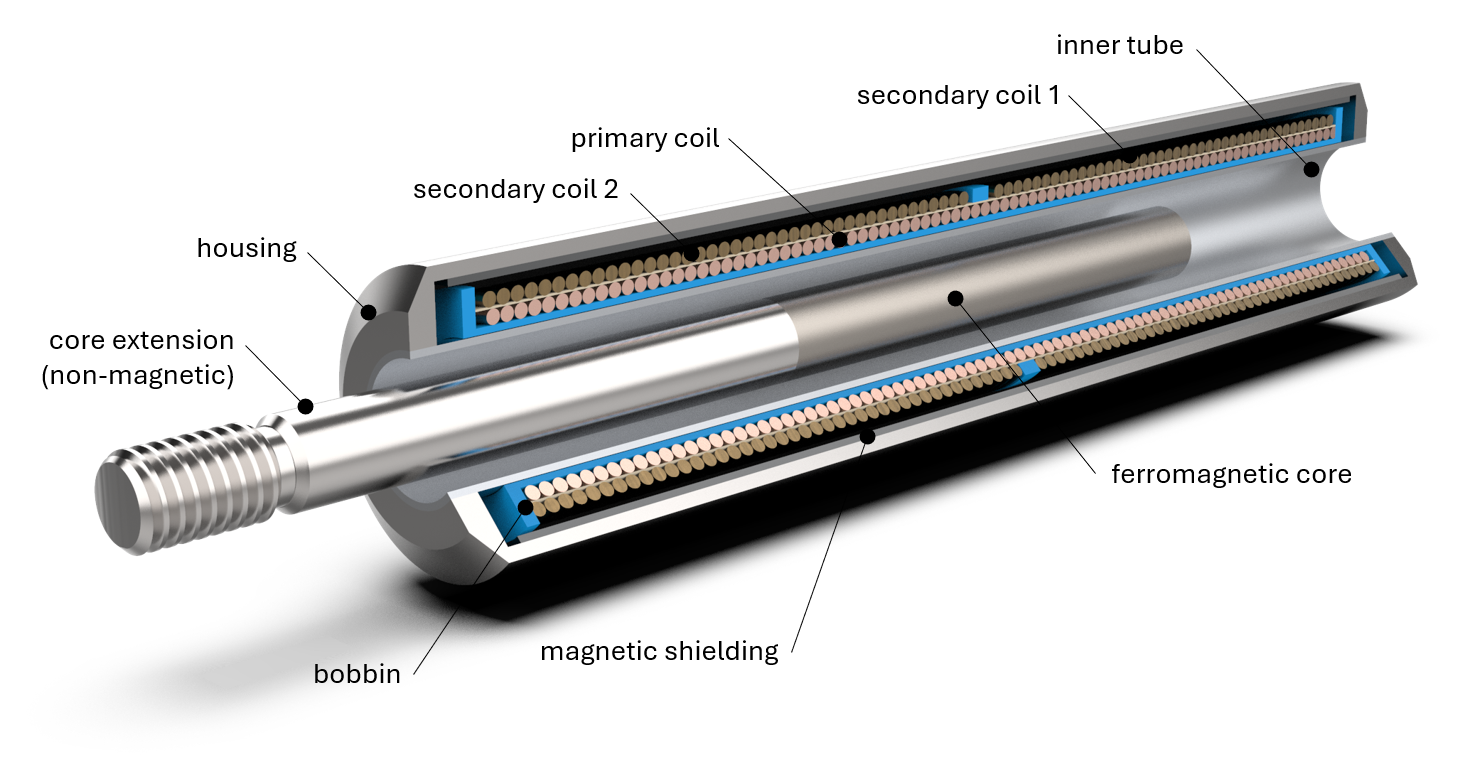 An LVDT (Linear Variable Differential Transformer) is an analog inductive sensor for displacement measurement. Inside the sensor, a coil system converts linear motion into an electrical signal.
The inductive measurement principle, combined with contactless operation between the primary and secondary coils and a movable ferromagnetic core (typically connected to the measured object), enables wear-free measurement. This makes the sensor particularly durable and robust.
The differential measurement principle of the two secondary coils ensures that external influences such as temperature variations have only a minimal impact on the measurement result. It also makes the system highly resistant to external electromagnetic interference (EMC).
In addition to high resolution and repeatability, LVDTs are characterized by exceptional robustness. Even under demanding environmental conditions—such as high-temperature measurements (up to 400 °C), high pressure (up to 1000 bar), or strong vibration—eddylab LVDTs operate reliably and without difficulty.
eddylab deliberately avoids electronic components and other sensitive parts inside the sensor to fully leverage the advantages of LVDT technology:
eddylab LVDT sensors are available in various versions to meet the specific requirements of different industrial sectors as well as research and development. Depending on the application, the displacement transducers are available in different mechanical designs, such as push-rod versions (guided or unguided core) or spring-loaded probes, enabling flexible integration into industrial measurement and automation systems. Variants with pneumatically actuated cores are particularly suitable for automated measurement tasks.
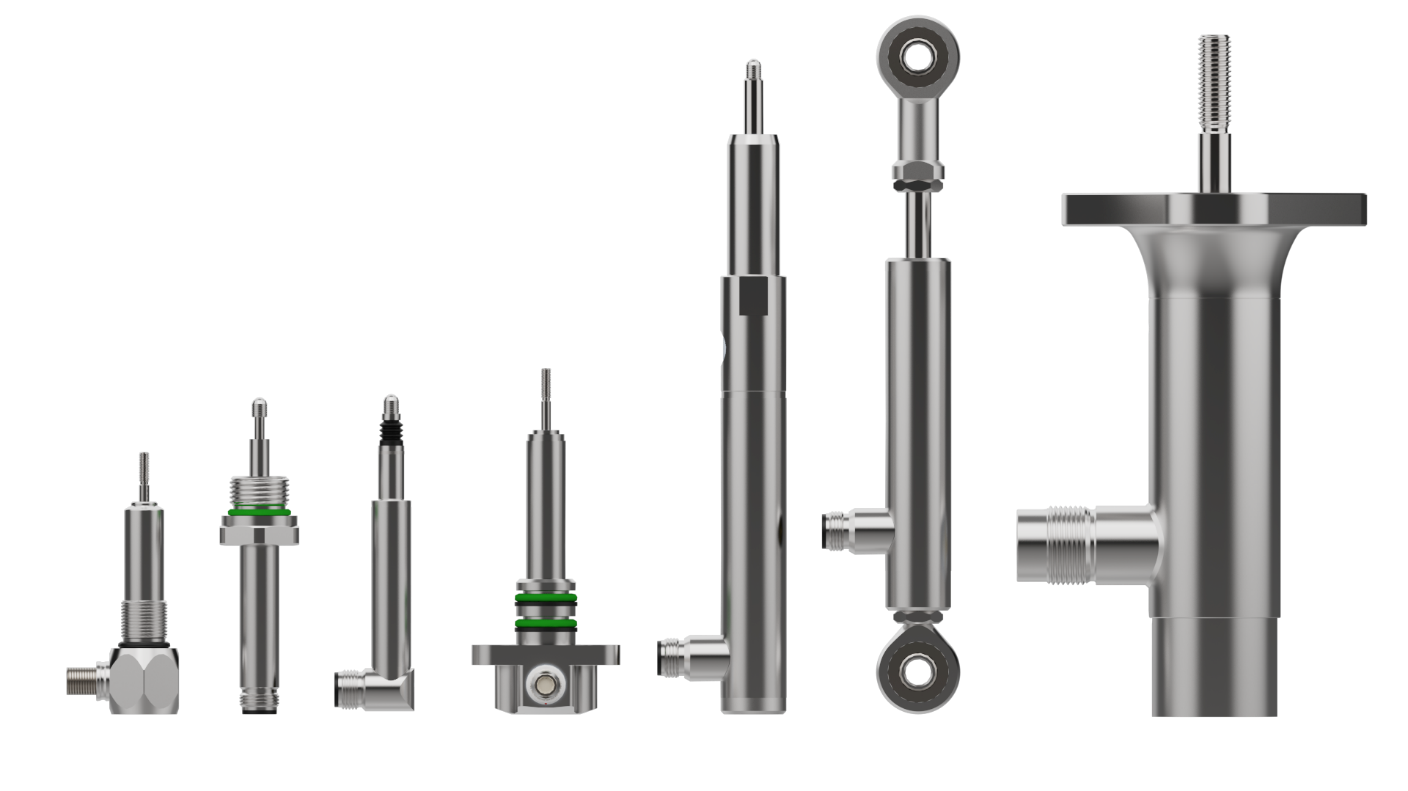
The SM, SL, HYD, SLX, and SLT series form the robust core portfolio for precise displacement and position measurement, especially under demanding environmental conditions.
These LVDT series feature:
Extremely robust versions with 20 mm stainless steel housings are designed for extreme industrial conditions. Other variants are specifically developed for integration into hydraulic cylinders for stroke measurement, offering pressure resistance up to 400 bar and compact designs for cylinder integration.
Additionally, the portfolio includes the F14 and F18 series, designed for integration into hydraulic and pneumatic systems:
Both series offer linearity up to 0.10% and use pushrod or spring-loaded mechanisms for flexible integration.
This variety of designs enables easy integration into a wide range of machine and system concepts.
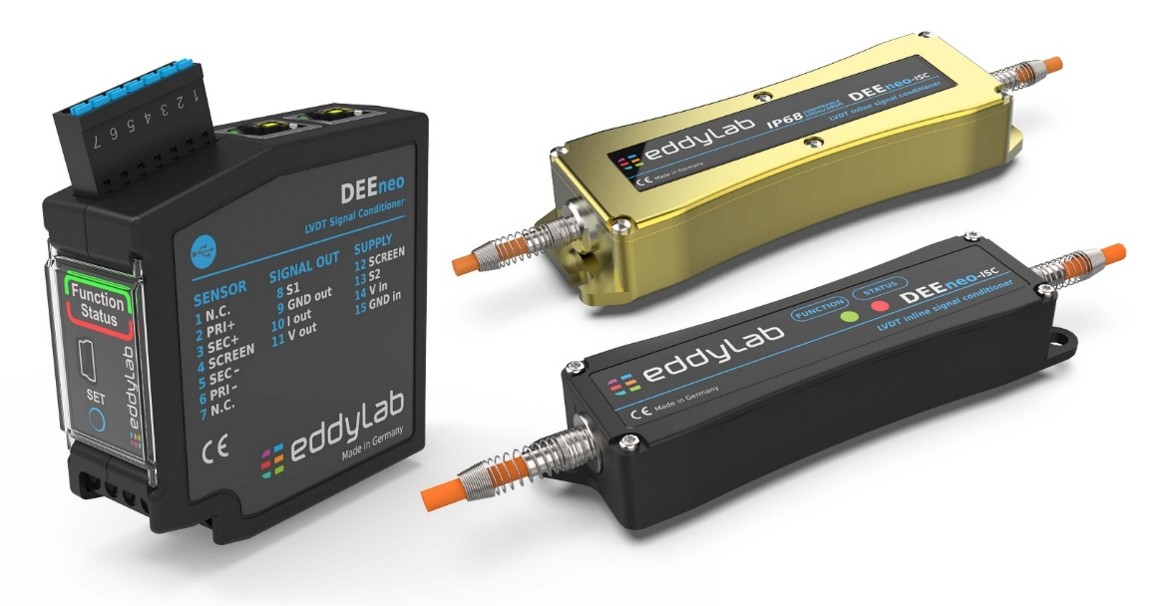
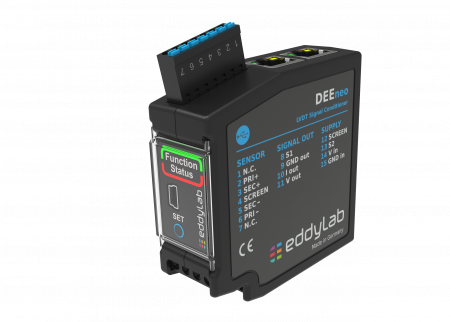
LVDT sensors require a carrier-frequency measurement amplifier for operation. At eddylab, the digital signal conditioner series is called “DEEneo” and ensures optimal signal conditioning and maximum measurement accuracy.
eddylab provides a fully matched and linearized measurement chain. The signal conditioners are available either for DIN rail mounting (DEEneo) or as in-line signal conditioners integrated into the sensor cable (DEEneo-ISC).
For wet, humid, or pressurized applications up to 100 m water depth (10 bar), a particularly robust inline version with IP68 protection class is available (DEEneo-ISC-IP68). This is especially suitable for underwater use, outdoor environments, or marine applications.
All models convert the sensor signal into a standardized analog output signal. Using an integrated microcontroller, linearity deviation of the connected displacement sensor can be compensated to values below 0.01%, enabling measurement chain accuracy in the (sub-)micrometer range.
A further focus of eddylab is custom engineering and application-specific solutions. Based on more than 30 years of experience in displacement and position measurement, eddylab develops tailored sensors together with customers—from single prototypes to series production for OEM integration.
Modifications of standard designs, such as custom cable lengths or modified housing and connector concepts, are implemented quickly and flexibly.
LVDT sensors reach their full potential in demanding applications where high reliability, long service life, and robustness are essential—such as aerospace, military applications, turbines, power plants, and factory automation.
Thanks to high IP protection ratings and housings made of stainless steel or titanium, applications under water or in corrosive environments are also possible. The sensors are resistant to aggressive media, such as those used in cleaning and disinfection processes in the food and packaging industries.
Pressure-tight versions are directly integrated into hydraulic and pneumatic cylinders as well as servo and proportional valves, where they precisely measure stroke or valve position.
Industry applications include:
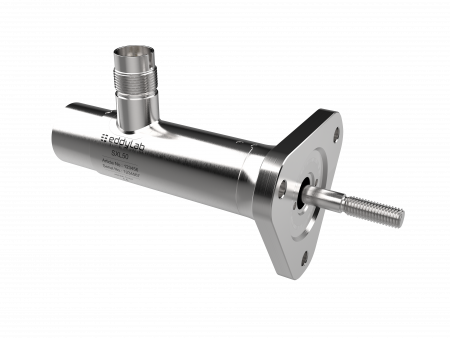
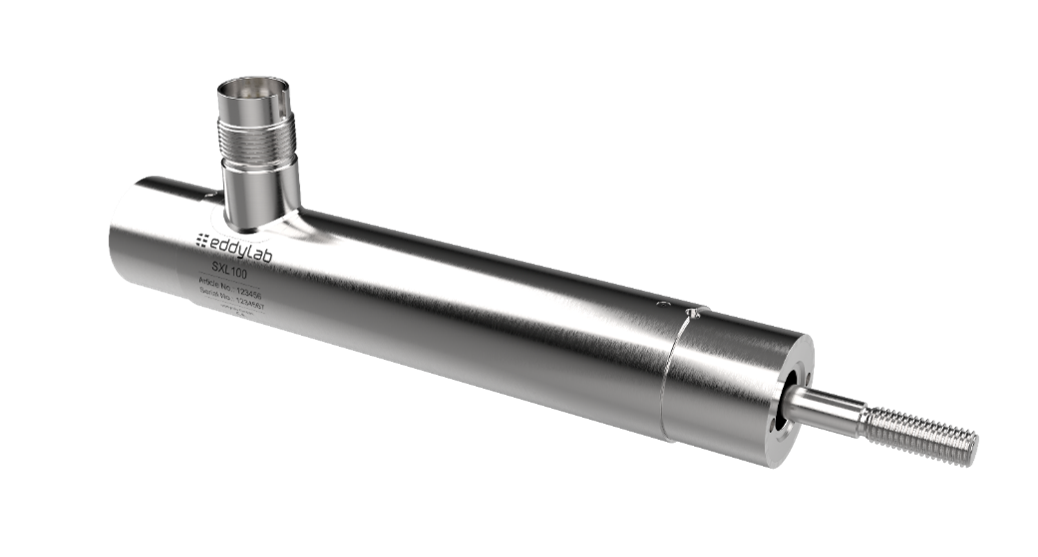 eddylab offers qualified sensor solutions for nuclear applications. The SXL sensor series is designed specifically for use inside containment structures in nuclear facilities. It features a fully inorganic, hermetically sealed design and operates at temperatures up to 400 °C.
With measurement ranges from 10 to 400 mm, the SXL sensors provide maximum resistance to radiation, shock, vibration, and seismic loads. They can be qualified according to international standards such as RCC-E or IEEE.
The SXL system solution also includes:
“The requirements for our sensor solutions are continuously increasing—especially in safety-critical and extreme environments”, says Christian Schrick, CEO of eddylab GmbH. “This is exactly where reliable sensor technology proves its value: precision, robustness, and reliability under conditions that allow no compromise—from demanding industrial applications to safety-critical use cases in nuclear power plants.”
Thanks to the modular design of eddylab’s LVDT product portfolio, a wide range of requirements can be flexibly covered. This enables the implementation of a perfectly tailored measurement system for nearly every application, ensuring each customer receives an optimal solution.